Article
Note taking strategy for project managers
Sep 13, 2023
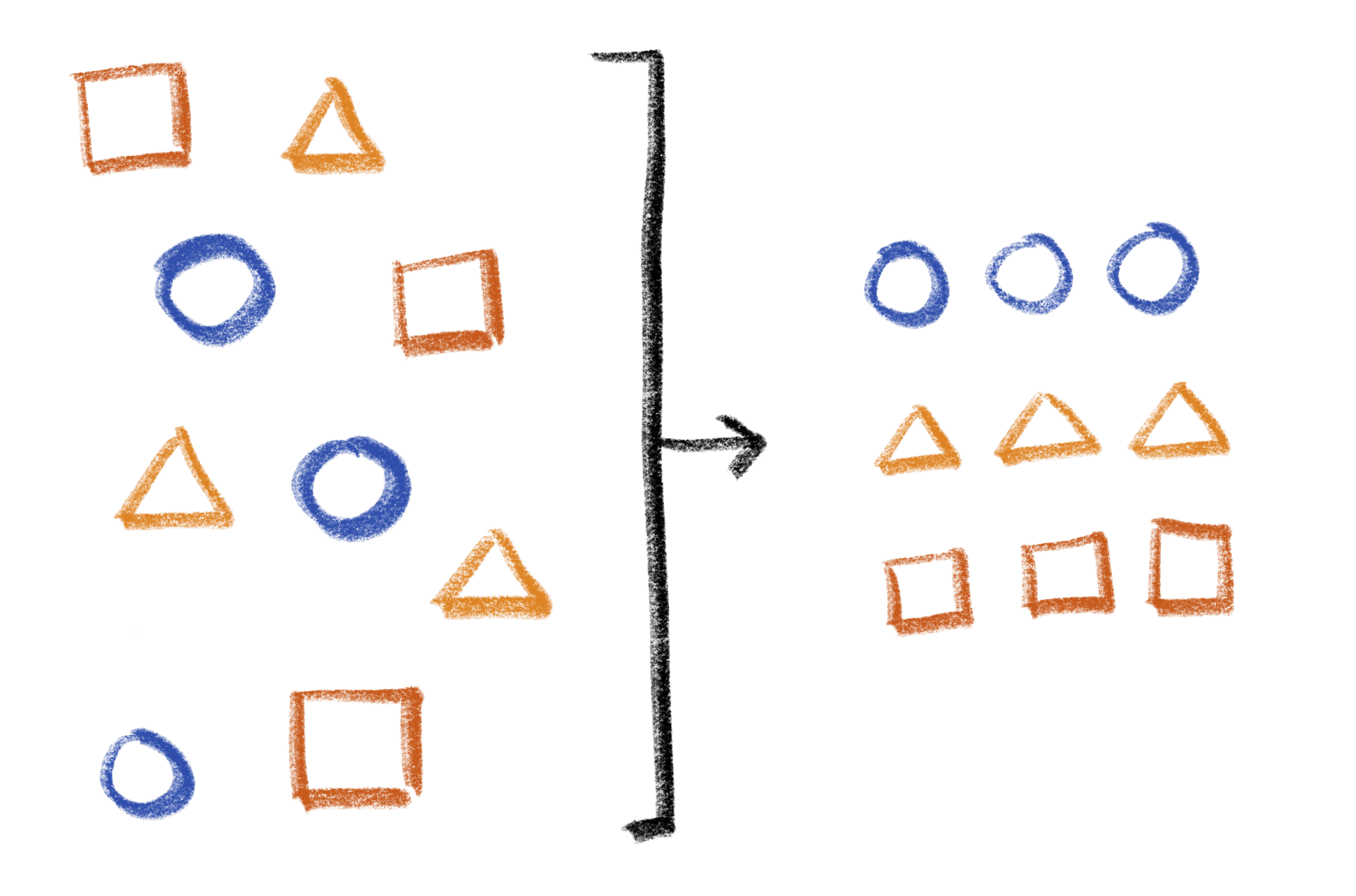
Project managers are often considered to be a team's glue. They not only have to keep track of tons of information from all stakeholders and share that information to team members, clients, partners and investors. They also provide focus, accountability, and organization to the team. Managing all this information is challenging and requires a different process than what most casual note-taking apps provide. It requires tools more akin to a knowledge base.
A knowledge base is a catalog of information, like a library book catalog. Cataloging information is just the process of assigning categories (aka hashtags, e.g. #myHashTag) to information. For example, the following notes have been categorized using hashtags:
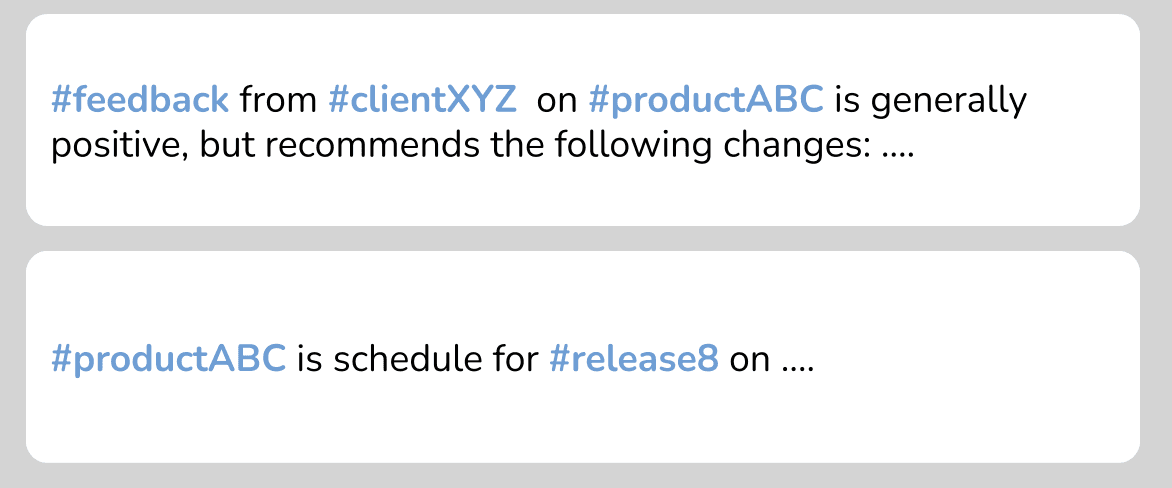
These categories have specific meaning and provide a shorthand for the note itself, reducing the amount of typing. The categories also provide guidance on what information to capture (more on these topics below).
Having categorized notes makes them vastly more valuable. Now they can be retrieved when they are needed and aggregated with other similar notes. For example, all #clientXYZ notes can be retrieved, or all #productABC & #feedback notes can be retrieved.
Why do teams need a knowledge-base?
A team knowledge base doesn't just help the PM manage their information, it also provides the collective knowledge for the team and stakeholders. It will provide transparency, accountability, organization, and focus. It will also serve as a communication channel to reduce meetings and lost content in emails/chats.
Keeping everyone on a team on the same page is challenging. Part of the problem is that team information from meetings, emails, chat, and just random thoughts are often dispersed among many stakeholders and not organized in a way to be usable. This information tends to be lost to time. If it's not immediately utilized (i.e. put on a to-do list), it's generally lost forever.
If teams can effectively share their notes, it would solve many of these problems.
Key to an effective knowledge-base
The key to having an effective knowledge-base is having well-defined metadata. Metadata is data that defines the structure of your information (ie. notes). The hashtags in the example notes above are examples of metadata: feedback, clientXYZ, productABC, and release8 were used to define the meaning of the example notes.
Some hashtags (aka categories) just need a good name to define them, but most need more details to ensure they are used properly by everyone on the team, especially as the number of hashtags grows over time. For example, a hashtag for "#customer" might seem obvious, but is this category only for paying customers or does it also include prospective customers? These details should be spelled out to make sure it's used correctly.
Join our community on
Related blog posts
Create your personal experience and knowledge base for your next interview using Gluey
Use Case
Sep 22, 2023
How to capture information by cataloging your notes
Article
Sep 17, 2023
Use case: cocktail recipe hub
Use case
May 2, 2023
Use case: mood tracker
Use case
May 19, 2023
Introducing Gluey
Article
May 2, 2023
ABOUT
Copyright © Team Notebook 2023. Patent pending. Beta Testing: please don’t rely on this site for critical or important information.